Cybersecurity is entering a new era
Random numbers are essential for encryption, authentication, and secure communication. Today, TRNGs (True Random Number Generators) are widely used and provide strong randomness for many applications. They are based on classical physical effects and have proven their value in real-world systems.
However, TRNG entropy sources are still connected to the physical environment — which means they can be impacted by factors such as temperature, power supply variations, aging, or electromagnetic interference. In high-security scenarios, these influences can become significant attack surfaces, especially as AI-supported analysis continues to advance and computing power increases as rapidly as the criminal activity of hackers.
“We’re bringing real quantum physics directly onto the chip, there by creating a scalable foundation for highly secure cryptographic keys.”
Dr. Bernd Burchard, Vice President IP-Management
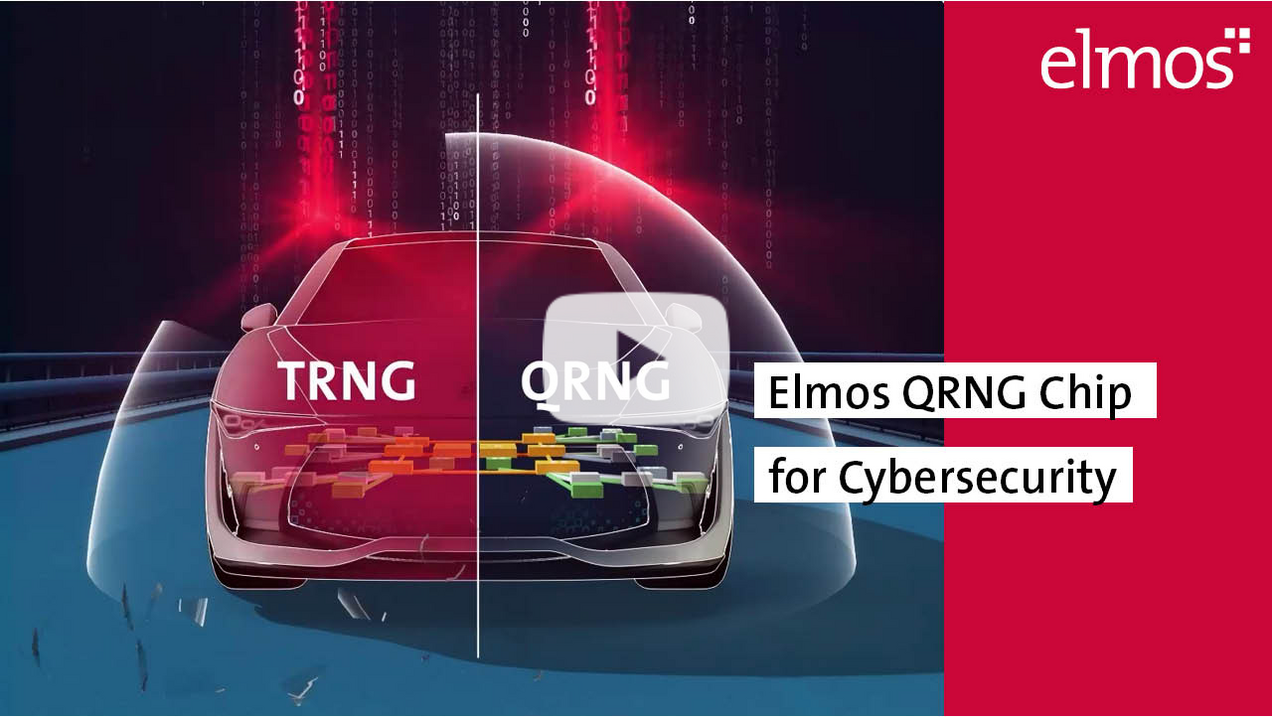
How does the QRNG work?
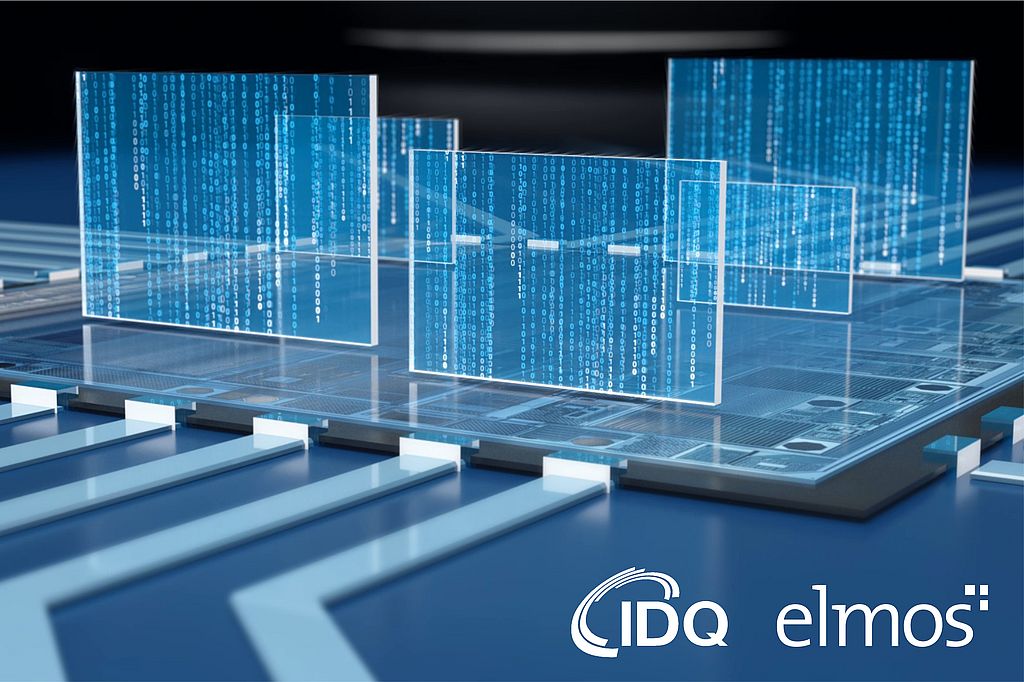
A quantum random number generator uses quantum effects to generate random numbers that are fundamentally unpredictable. Instead of classical physics, QRNG leverages photonic quantum effects, generating randomness that is inherently unpredictable. This makes QRNG particularly attractive for AI- and quantum-secure security architectures, where reducing risk vectors is critical.
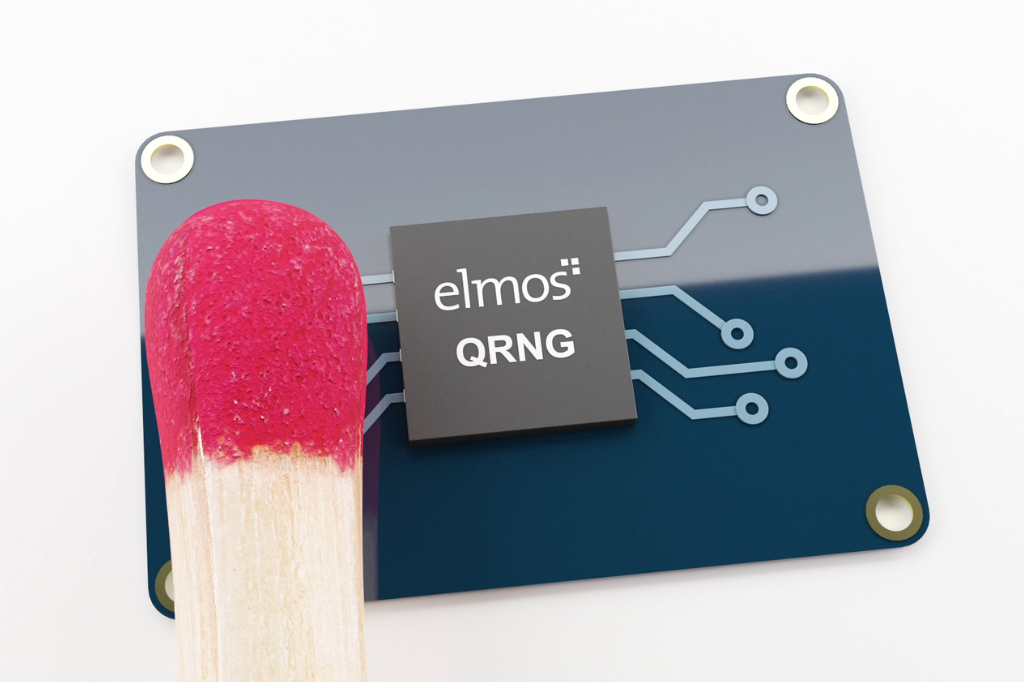
The Elmos QRNG is an ultra-small, monolithically integrated solution with scalable data rates from 500kbps up to multi-Mbps, operation down to 1.8V with lowest power consumption, and a short warm-up phase enabling faster key generation. It is available as a standalone IC and comes in a compact DFN-2x2 package. Alternatively, it can be integrated into higher-level designs and technology nodes.
Leading-edge technology from Dortmund
Elmos, a leading manufacturer of automotive mixed-signal semiconductors, is one of the pioneers and a figurehead for the profound structural change in Dortmund and the entire Ruhr region. Thanks to its targeted focus on future-oriented industries such as microelectronics, nanotechnologies or IT, Dortmund is a rapidly growing technology and start-up center. It has established itself as an important science location on a national and international level. A dynamic eco-system of companies, universities, colleges and research institutes is driving forward-looking innovations through joint cooperations.
In this context, the Wirtschaftsförderung Dortmund (Economic Development Agency) presents the new image film “Spitzentechnologie aus Dortmund” (Leading-edge technology from Dortmund, in German only). Dr. Roland Krumm, Head of Governmental Relations & Research Funding at Elmos, underlines the innovative strength of the company as well as the long and deep connection between Elmos and the business location Dortmund. The image film is available on the YouTube channel of Wirtschaftsförderung Dortmund under the following link:
https://www.youtube.com/watch?v=dOykMdFWTAw
©argum
©argum
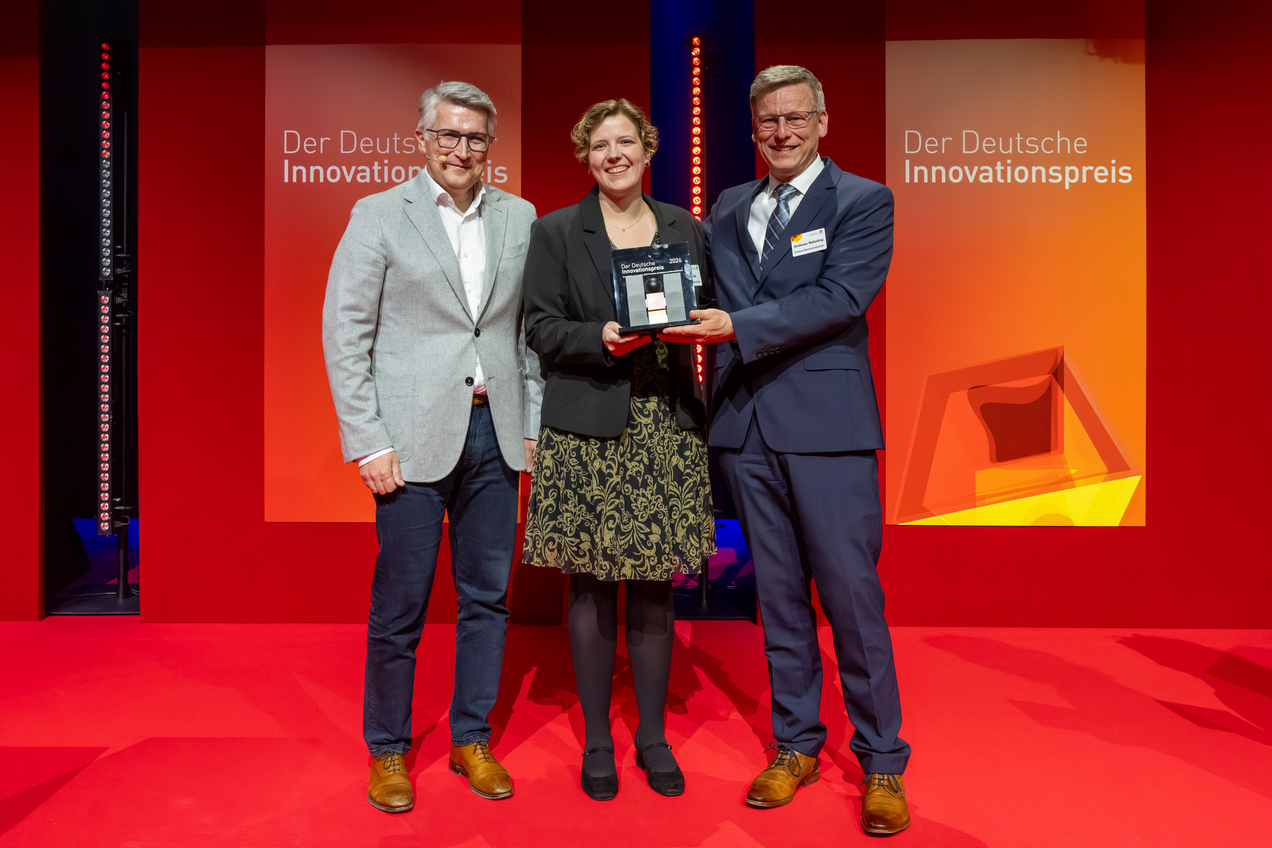
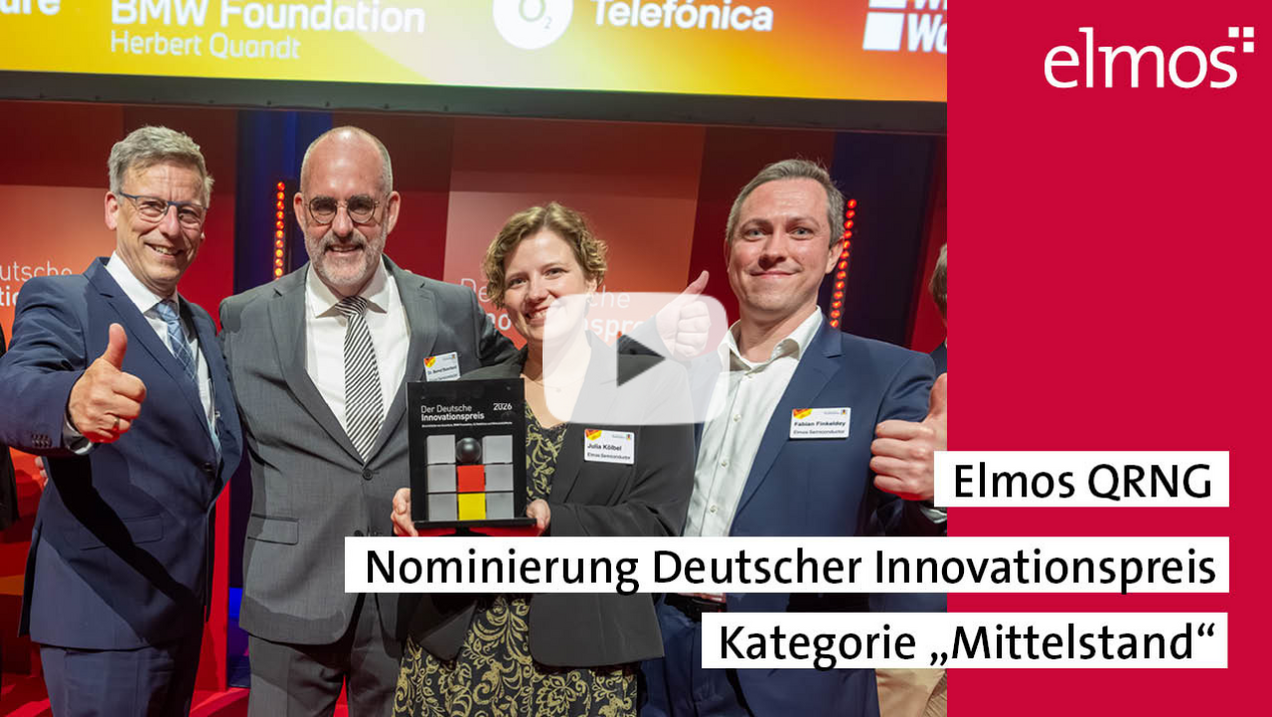
The QRNG shows how highly specialized semiconductor know-how can help address one of the key challenges of our time: protecting data and communication in an increasingly connected world. And behind it stands a cross-functional team that combines expertise in the fields of semiconductor design, quantum effects, system integration, and application-oriented development. This success was made possible by close collaboration across disciplines. From the first concept to an industrially applicable solution, the project brought together technical expertise, creativity, and a shared commitment to innovation.
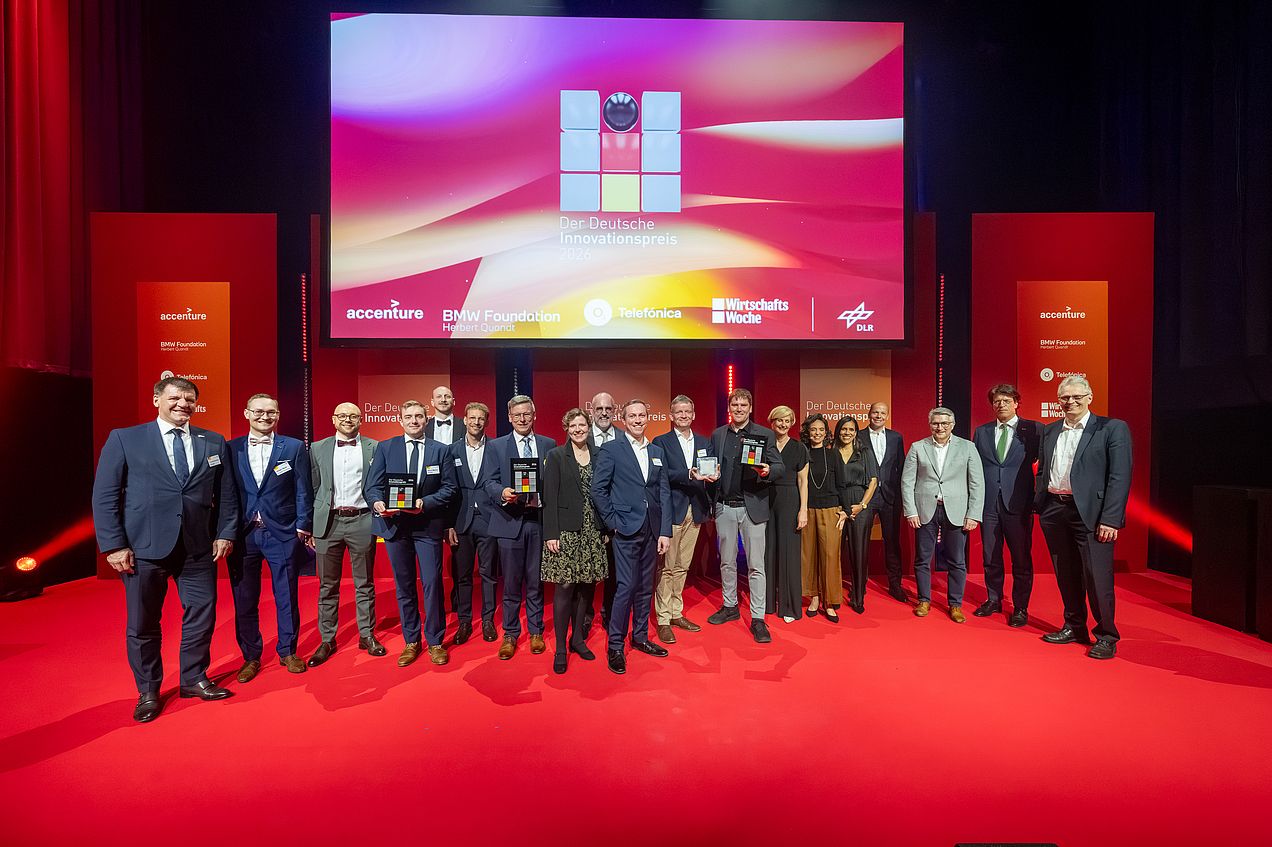
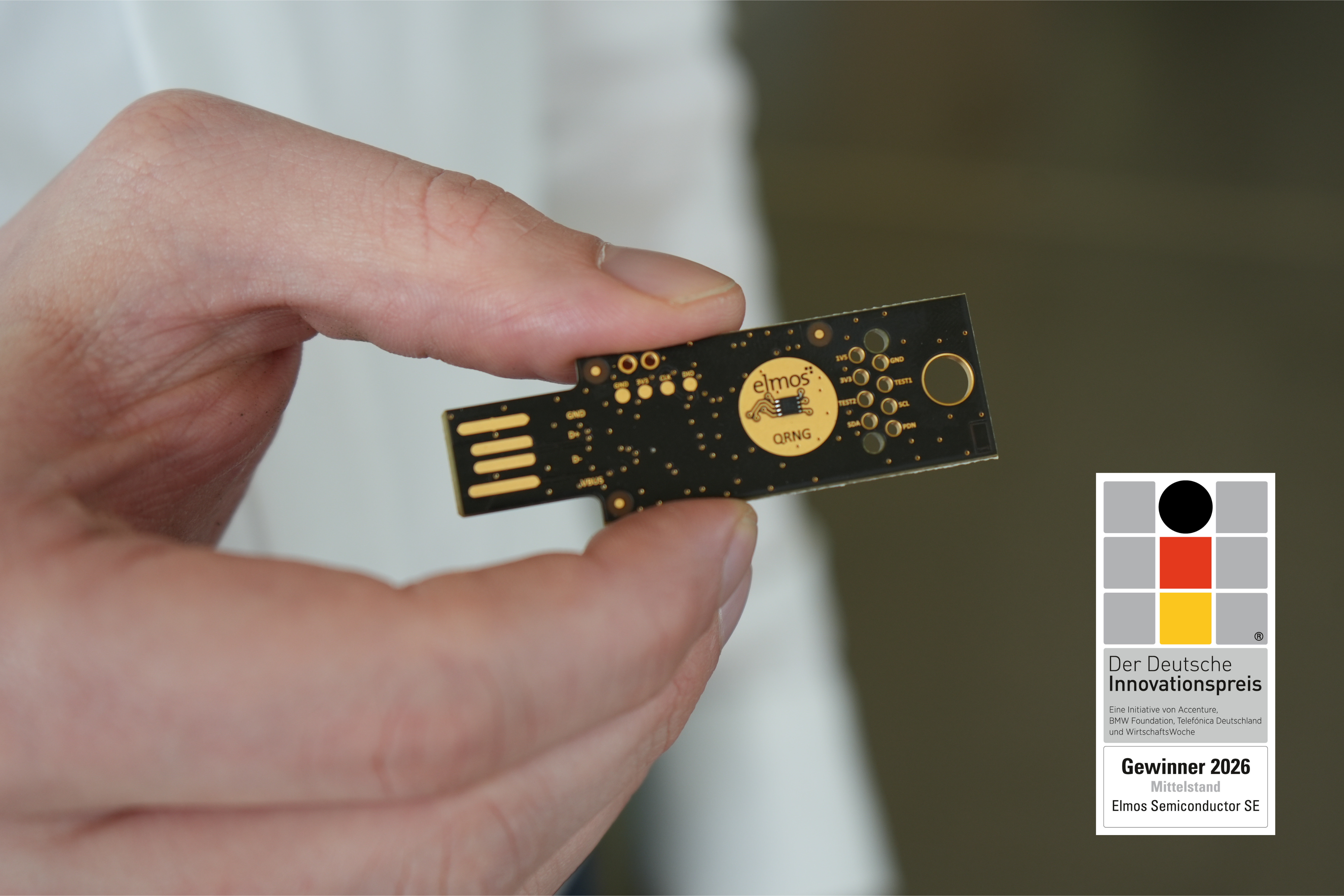
The German Innovation Award honors solutions that create genuine added value through technological progress, practical relevance, and forward-looking design. The award recognizes the technology’s potential to support more secure and trustworthy digital infrastructures.

“It’s especially great to see how an initial idea has turned into a real innovation. We’ve invested a lot of time, creativity, and team work. I’m particularly pleased that our work can help make the world a safer place in an increasingly interconnected world.”
Julia Kölbel, Development Engineer

“This award is a wonderful recognition of our team’s achievements. Many of our colleagues have made a decisive contribution to this success. And who knows − perhaps the smallest product ever to win this award will ultimately have the greatest impact on society.”
Andreas Nebeling, Vice President Global Business Development

Supported by IPCEI/MECT
We would like to thank the Federal Ministry for Economic Affairs and Energy for supporting this project under the IPCEI MECT initiative, based on a resolution of the German Bundestag; the European Union – NextGenerationEU; the Ministry of Economic Affairs, Industry, Climate Action, and Energy of the State of North Rhine-Westphalia; the Ministry of Economic Affairs, Labor, and Tourism of Baden-Württemberg; and the Ministry of Economic Affairs, Labor, and Energy of the State of Brandenburg.
Supported by VE-DIVA-IC
We would like to thank the Federal Ministry of Research, Technology and Space (BMFTR) for supporting early-stage R&D activities and fundamental research for this project, based on a resolution of the German Bundestag, within the project VE-DIVA-IC under the programme “Vertrauenswürdige Elektronik” (ZEUS).